Kyle Thomas Hemingway: The ephemera edit

An ongoing digital archive of 1,376 items (and counting) proving that I read, I saw, and I actually paid attention.

  • Basilica of St. Michael

    Basilica of St. Michael

    Mondsee, Österreich

    Abbot Benedikt Eck, Mondsee Abbey, 1470–1487
  • That! Feels Good!

    That! Feels Good!

    by Jessie Ware

  • Rebecca

    Rebecca

    Music by Sylvester Levay / Book and lyrics by Michael Kunze / Based on “Rebecca” by Daphne du Maurier / Directed by Francesca Zambello (Raimund Theater Vienna)

    The view from our seats after the set broke down 30 minutes into the performance, causing the remainder of the evening to be cancelled
  • St. Stephen’s Cathedral

    St. Stephen’s Cathedral

    Wien, Österreich

    Various, St. Stephen’s Cathedral, 1137-1578
  • Schloss Schönbrunn

    Schloss Schönbrunn

    Wien, Österreich

    Johann Bernhard Fischer von Erlach, Schloss Schönbrunn, 1569
  • Ruszkik Haza!

    Ruszkik Haza!

    Budapest, Hungary

    Mihály Kolodko, Ruszkik Haza!, 2016
  • Országház

    Országház

    Budapest, Hungary

    Imre Steindl, Országház, 1885-1904
  • Cipők a Duna-parton

    Cipők a Duna-parton

    Budapest, Hungary

    Gyula Pauer and Can Togay, Shoes on the Danube Bank, 2025
  • Szent István-bazilika

    Szent István-bazilika

    Budapest, Hungary

    József Hild, Rotunda, 1851–1906
  • Szimpla Kert

    Szimpla Kert

    Budapest, Hungary

    View of the interior
  • Dohány utcai zsinagóga

    Dohány utcai zsinagóga

    Budapest, Hungary

    Frigyes Feszl, ceiling, 1854-1859
  • “One of the things I’ve learned is never to hoard ideas, because either they are not so relevant or they’ve gone stale. Whatever it is, pour it out.”

  • Spoiler Alert

    Spoiler Alert

    Directed by Michael Showalter

    “I don’t care where you have to go and find one I don’t care if you have to drive to Ikea and buy one. I don’t care if you have to go to Jennifer Convertibles. Give my husband a bed!”

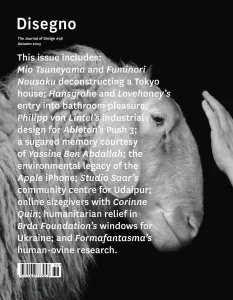
  • Disegno #35

    Disegno #35

    Disegno, the quarterly journal of design

    “Why do we still fail to realise that difference adds depth and complexity, creating a more resilient system for all?”

  • Deluxe: How Luxury Lost Its Luster

    Deluxe: How Luxury Lost Its Luster

    by Dana Thomas

    “Real luxurious people hate status. You don’t look rich because you have a rich dress. When you look at a person, do you see the spirit or the sexiness or the creativity? Just to see a big diamond, what does it mean? It’s all about satisfaction. I think it’s horrible, this judgment based on money. It’s all an illusion that you look better because you have a symbol of luxury. Really, it doesn’t bring you anything. It’s so banal.”

  • Nasturtium Breakfast 2023

    Nasturtium Breakfast 2023

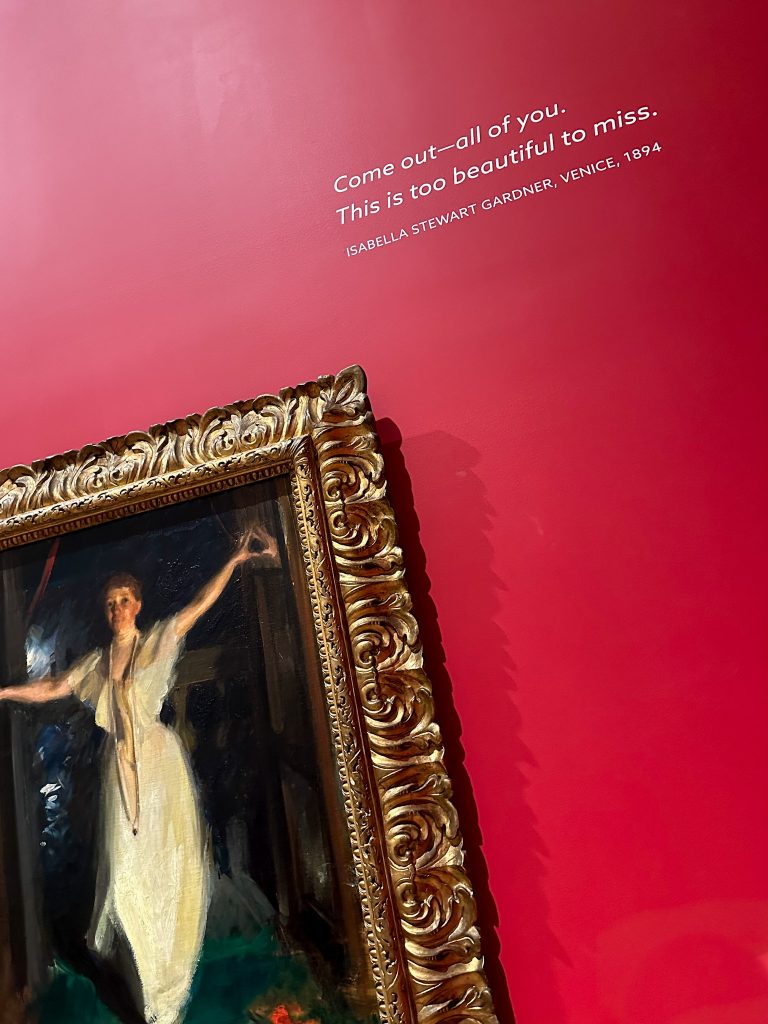
    Isabella Stewart Gardner Museum

    The view of the Nasturtiums in the courtyard
  • The Well-Being Issue

    The Well-Being Issue

    Kinfolk Magazine

    “For the less zealous, a silent city may come with trade-offs. Enforced quiet—imposed, say, through city-wide regulations—is far from a cure-all. Not only would it limit activity and deflate the vitality of urban life, but it would inevitably shrink that third space between home and work. The street—the liminal zone of travel, meetups and play—would be reduced to quiet desolation.”

  • Sweeney Todd: The Demon Barber of Fleet Street

    Sweeney Todd: The Demon Barber of Fleet Street

    Music and lyrics by Stephen Sondheim / Book by Hugh Wheeler / Based on “Sweeney Todd” by Christopher Bond / Directed by Thomas Kail (Lunt-Fontanne Theatre, New York City, NY)

    Curtain call at Sweeney Todd
  • Parade

    Parade

    Book by Alfred Uhry / Music and lyrics by Jason Robert Brown / Directed by Michael Arden (Bernard B. Jacobs Theatre, New York City, NY)

    Curtain call at Parade
  • For this ambitious inquiry, Grau traveled to Williamstown, New York City, Vienna, Oxford, Ampthill, Moscow, Berlin and London to speak to the people working behind the scenes in the Western world’s greatest museums. Focusing on the 1960s to the 2000s, Grau details the stories of these cultural institutions from the perspectives of those who know them.