“I know now, what I didn’t then, that affection can’t always be expressed in calm, orderly, articulate ways; and that one cannot prescribe the form it should take for anyone else.”
Kyle Thomas Hemingway: The ephemera edit
An ongoing digital archive of 1,429 items (and counting) proving that I read, I saw, and I actually paid attention.
Category is
Book
-
-
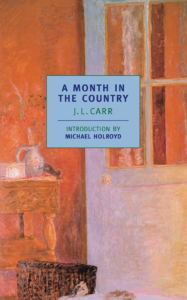
“We can ask and ask but we can’t have again what once seemed ours for ever—the way things looked, that church alone in the fields, a bed on a belfry floor, a remembered voice, the touch of a hand, a loved face. They’ve gone and you can only wait for the pain to pass.”
-
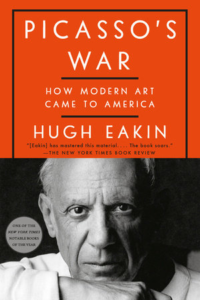
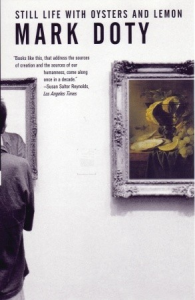
“Dedicating the new museum to ‘the cause of peace,’ FDR took up the theme that Barr had been pushing ever since his initial encounters with Nazism: the essential connection between modern art and liberal government. ‘The arts cannot thrive except where men are free to be themselves and to be in charge of the discipline of their own energies and ardors,’ Roosevelt said. ‘The conditions for democracy and for art are one and the same.’”
-
“Is any of this real? Could this possibly be the truth? Did such a day, I had to ask, really happen? Of course it did, George said. As inculcated, he began (in his accent it was a word that brought me great pleasure)—as inculcated as we are in the belief that we’re meant for some great purpose, that tomorrow, he said, we’ll live as the wealthy live, we are in truth conditioned to expect very little of our lives. It feels closed off to us to enjoy life. Yet we all have such days—at least once, but as often as not peppered throughout a life. These are the days we would see before we die, if it turns out to be true that we see anything at all.”
-
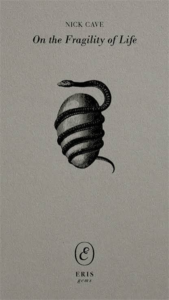
“Loss becomes the primary condition of living. That doesn’t mean you’re in a hopeless, grief-stricken state all the time; it just means that you carry a deeper understanding of what it is to be human. We suffer as human beings, but out of that can come enormous joys, and genuine happiness, too. It can run in tandem with this ordinary sense of suffering. Otherwise, joy doesn’t resonate fully. Joy seems to leap forth out of suffering. Regardless of your loss, you see how beautiful, how meaningful, how joyful the world can suddenly be. Human beings in general, you know, are fleeting things. That’s something to understand on a fundamental level. That we have value. That we are precious.”
-
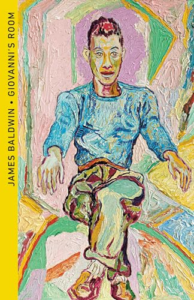
“Ça ne manque pas, les chambres. The world is full of rooms— big rooms, little rooms, round rooms, square ones, rooms high up, rooms low down—all kinds of rooms! What kind of room do you think Giovanni should be living in? How long do you think it took me to find the room I have? And since when, since when”—he stopped and beat with his forefinger on my chest—“have you so hated the room? Since when? Since yesterday, since always? Dis-moi.”
-
“Make people think again. We may believe that we’re at the pinnacle of awareness, civilization, and knowledge. We are, in fact, in the Dark Ages. Nobody is thinking for themselves. That’s why we need institutions to provide education, to offer a forum where things are open and where we can listen to alternative voices. Make people think again. It’s a simple thing. But think again.” (Alain Servais)
-
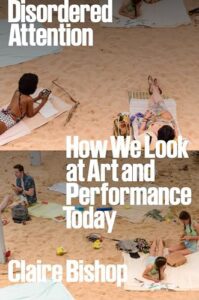
“Of course, the larger context for such visual saturation lies beyond exhibition culture. The pressure placed upon the human capacity to digest information is an inevitable outcome of the attention economy, in which businesses compete for consumers’ consideration, as measured by clicks on pop-ups, sponsored posts, personalized offers, etc. In this marketplace, the supply of information isn’t lacking; what’s scarce is the limited reserve of human attention.”
-
“The rabbi, my lover, is back from Warsaw, so my concentration and self-esteem are destroyed. I wrote mythological poems in ninth grade, and the myth my lover resembles is Orpheus—not that I revere Orpheus, I think Orpheus was a failure and a turncoat, I prefer Abraham for being a semi-literalist about God’s commands. The real heartthrob is Isaac, who, if he were alive now and living in Hoboken or in this tiny town near Hoboken, a town I am devastated to admit is my permanent address, would wear studious gold-framed glasses and would have an unfashionable halo of disordered and frizzy curls; he would play the oboe and be constantly licking and biting and polishing his reeds; and he would treat me disrespectfully.”
-
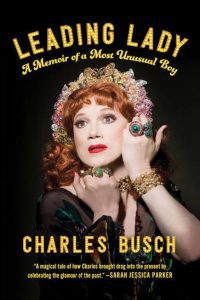
“Fortunately, I did still say yes to some terrific opportunities, such as the chance to play the title role in a summer stock tour of Auntie Mame. To be on the safe side, at my cardiology checkup, I asked Dr. Erica Jones if she thought I had the endurance to undertake the physically demanding role of Mame. Not in the least showbiz savvy, she leaned in with a concerned look. ‘Will you be lifting anything heavy?’ To which I replied, ‘Well, I’ll be carrying the plot.’”
-
“That’s something I really enjoy, to kind of stick your brain into somebody else’s brain and figure out how he or she did something. There is a real learning process that is happening there, and it’s how I learned about so much. There is a sort of embodied element to it, you have to actually go through the process, and I think when you do that there is a lot to be gained.”
-
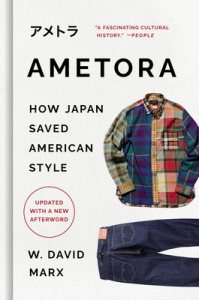
“So how did the Japanese save American style? The Americans discarded style as it became unfashionable and moved on to new things. The Japanese collected, analysed and improved it, and sold it back.”
-
“Satisfy your mind by responding to your senses. We need to be actively conscious of them and not going about aimlessly in our daily lives.”
-
“It’s very fluid, this space between philosophy and literature, and that’s something that resonates for me.”
-
“In the West, frozen water is simply used to chill and dilute a drink; in Japan it is an active participant.”
-
“…the writer and critic David Levi Strauss has observed: ‘One could say that the split within curating – between the management and control of public works (law) and the cure of souls (faith) – was there from the beginning. Curators have always been a curious mixture of bureaucrat and priest.’”
-
“The rest were simply repetitions
Of the more notorious. Slim editions: Less practised; less hardened:
Less vicious; less strong:
Just a nice crowd trying to get along.” -
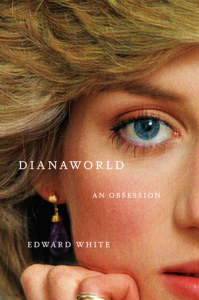
Diana once snuck out in male drag to go to the Royal Vauxhall, a famous London gay bar, with Freddie Mercury.
-
“Isn’t that it, to be yourself and somehow, to belong?”
-
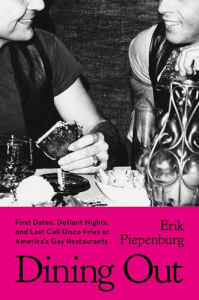
“I think there’s a real thirst for younger generations to have those kinds of spaces. I think as younger generations maybe look to gay restaurants or gay cafes as possible meeting places, I think that’s also going to bring up interest in the past when those kinds of places were everywhere, at least in gay neighborhoods and also in small towns and medium sized cities as well.”