“One always has exaggerated ideas about what one doesn’t know.”
Kyle Thomas Hemingway: The ephemera edit
An ongoing digital archive of 1,429 items (and counting) proving that I read, I saw, and I actually paid attention.
Category is
Book
-
-
“You confuse what’s important with what’s impressive.”
-
“As the garment industry left the United States, it undid the work of industrial feminists like Clara Lemlich and Rose Schneiderman, who had the audacity to demand that intellectual satisfaction was the birthright of every sewing machine operator. This new brand of feminism didn’t care to protect sewing work as good work; rather it scoured the earth to find the cheapest new sources of exploitable, female labor.”
-
“But now isn’t simply now. Now is also a cold reminder: one whole day later than yesterday, one year later than last year. Every now is labeled with its date, rendering all past nows obsolete, until—later of sooner—perhaps—no, not perhaps—quite certainly: it will come.”
-
“There is a kind of energy born out of shame, formed by and in it, that can act as a force for transformation. This energy finds its expression in a theatricalized identity, in performance, in a love of display or extravagance, in parody. Self-display and theatricality are and have been among the most important means of defying heteronormative hegemony—and this is why they have always been the objects of such virulent attacks.”
-
“Most of life is so dull it is not worth discussing, and it is dull at all ages. When we change our brand of cigarette, move to a new neighborhood, subscribe to a different newspaper, fall in and out of love, we are protesting in ways both frivolous and deep against the not to be diluted dullness of day-to-day living.”
-
“It’s always wonderful when something altogether wrong ends right, without the help of either religion or the police.”
-
“I have always distrusted good people. I never believed as a child that goodness came naturally. I always suspected that beneath it lay some sort of payment for services past or still to come.”
-
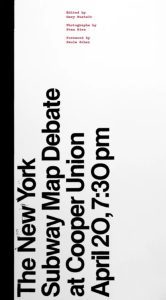
“This is Mr. Vignelli’s map, which everyone can see is an aesthetically pleasing map. And it’s made some lovely T-shirts for us at the MTA. But there is no relationship between the subway routes on this map and the city above. I’m a native New Yorker and I know what New York looks like, and it doesn’t look like this.”
-
“…this idea of how we can individually and collectively reenact or instead metabolize and recover from trauma in our bodies is most intriguing. How being a trans woman successfully walking body after your transition, finally being heralded for your femininity by your peers after being physically threatened, endangered, and brutalized by the outside world for not blending in might just be a type of bodily recovery from a lifetime of such trauma.”