“So many of us will accept adoration even if it’s not about us, even if it’s only about the perception of us. Or some service we provide. We are happy to be cast in other people’s plays so long as we’re given a role.”
Kyle Thomas Hemingway: The ephemera edit
An ongoing digital archive of 1,429 items (and counting) proving that I read, I saw, and I actually paid attention.
Category is
Book
-
-
“Is this the bar for horses or have I come to the wrong place?”
-
“It’s just a real gentle moment. I’m here by myself and I don’t mind. I kind of wish it could just stay like this for maybe a few years, or I just never moved out of this spot. I could just watch the light stay like this. And maybe somebody coming along and just putting their arms around me for a few minutes.”
-
“Introducing the idea of beauty as a salve and of aesthetics making something difficult accessible.”
-
“Most art will disappear. The past is edited so it always looks clearer to us. Today always looks a bit of a jumble. We’ll put up with rubbish from now, but not with rubbish from the past.”
-
“In the Internet, there is a fountain of youth into which at first you drunkenly plunge your face, and then in the dawn light you see your reflection, battered by the years.”
-
“The thing that makes life interesting is that it ends. The thing that makes love worthwhile is that it’s all we’ve got.”
-
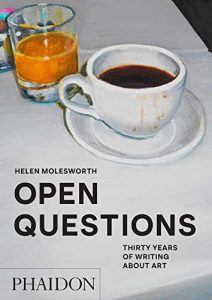
“Art writing helps us to understand art which in turn helps us to understand such crises. But art writing itself is in crisis. Newspapers and magazines offer fewer channels than ever for independent art criticism, persistent institutional biases exclude the positions of many, and a proliferation of platforms presents opportunities and challenges in equal measure.”
-
“Curiosity takes ignorance seriously, and is confident enough to admit when it does not know. It is aware of not knowing, and it sets out to do something about it”
-
“Men, she suggested, should stop looking at clothes as signifiers of gender and class and just enjoy them.”
-
“It strikes me that the glory of art is the glory of survival, for survival is an inhuman property. It is an attribute of mountains and objects, of the worthless toys in the children’s bedroom at home that will outlive us all. That which is human decays and disappears, only in art does the quality of humanity favor survival. Only in art is a record kept of an instant, that the next instant does not erase.”
-
“Do you know what a cliché is? It’s a story so fine and thrilling that it’s grown old in its hopeful retelling.”
-
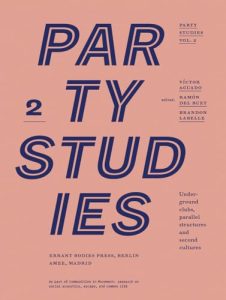
This edition elaborates understandings of the party by considering the hidden, the invisible, and the underground as material and imaginary forces, where partying is not only festive and excessive, but manifests in forms of social and political organizing, cultural and subcultural conversation, the maintenance of safe spaces and the building of parallel structures against established institutional forms.
-
“What Elsie Mendl had was something else that’s particularly American—an appreciation of vulgarity. Vulgarity is a very important ingredient in life. I’m a great believer in vulgarity—if it’s got vitality. A little bad taste is like a nice splash of paprika. We all need a splash of bad taste—it’s hearty, it’s healthy, it’s physical. I think we could use more of it. No taste is what I’m against.”
-
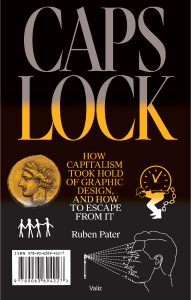
“The question is not if design will remain a viable profession in post-industrial societies, but for how long.”
-
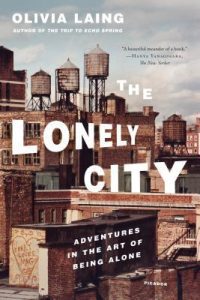
“I don’t think the cure for loneliness is meeting someone, not necessarily. I think it’s about two things: learning how to befriend yourself and understanding that many of the things that seem to afflict us as individuals are in fact a result of larger forces of stigma and exclusion, which can and should be resisted.”
-
“Sometimes we do things, without thinking, that make no sense to us until much later, and yet appear to have been prompted by the most alert part of our being.”
-
“I am a camera, with its shutter open, quite passive. Some day all of this will have to be will have to be developed, carefully printed, fixed.”